Wilfrid George
It is with great regret that we announce that Wilfrid George died this week, May 2026. We have a few local maps left and the last remaining stock of the Aldeburgh maps. Wilfrid’s family will not be continuing the business so this is the last of the stock.
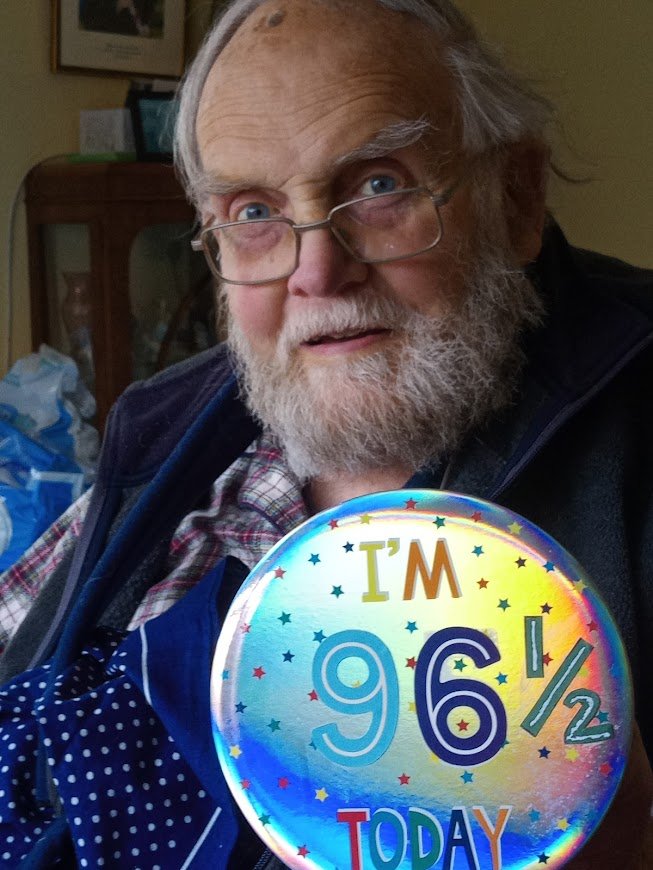
Mapmaker, pharmacist, enthusiast and campaigner for public footpaths and wildlife.
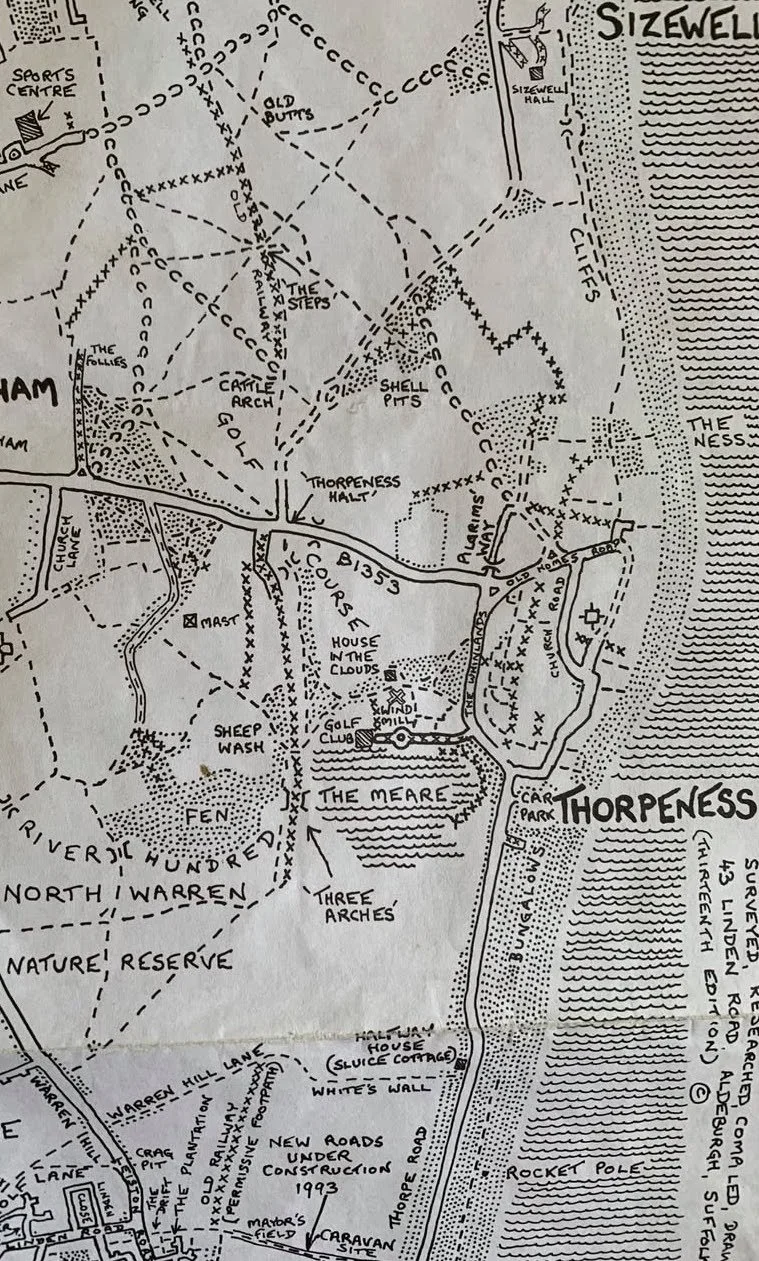
We are great admirers of his delightful and useful hand-drawn maps. His work has made so much of Suffolk and East Anglia accessible and he has campaigned tirelessly for walkers’ rights and has guided thousands of visitors and locals to explore the Suffolk countryside.
Wilfrid’s day job was as a pharmacist, but in his spare time he walked and marked the footpaths on maps with a camel hair brush and green ink. The first map of Suffolk he drew was Beccles where he was evacuated from London.
He told us that he watched a programme on Scott of the Antarctic as a boy and decided he wanted to be an explorer - and so he was, but in East Anglia rather than Antarctica. His work has contributed to the maintenance, survival and continued existence of so many footpaths and it is thanks to him that much of the paths and byways look the way they do. He has been influential in the preservation of walkers’ rights.
Wilfrid’s work is renowned far beyond the borders of our county. The maps are renowned for their sometimes acerbic and blunt comments: ‘Fallen Signposts: the walker who takes wire, string and pliers, and re-erects these, will earn the gratitude of those who follow’. ‘Brambles would be less of a problem if more walkers carried secateurs.’
Born in 1929, his family came to live in Beccles in 1939 although his father remained working as a pharmacist in London until he bought a chemist’s shop in Halesworth in 1940. Wilfrid remembers travelling on the bus in London and studying the free maps of London bus, tram and trolleybus routes.
Wilfrid followed his father into the pharmacy trade, working first in his father’s shop in Halesworth, and then running the Aldeburgh chemist. He found Aldeburgh less friendly than Halesworth due to “demanding retired population”.
He did much to get footpaths that had been closed reopened and campaigned vigorously, coming up against landowners, farmers, gamekeepers and parish councils. Often, he noted, people who were subject of his complaints were often also his pharmacy customers. He joined the Ramblers Association in 1962, becoming an active campaigner for rights of way. In those days, Wilfrid explains, people were laughed at in 1960s for regarding walking as a recreation. When he drew the first map of the Aldeburgh/Leiston area, the Aldeburgh stationer would not sell them and it was the ironmonger John Payne who agreed to take them.
In 1980 he retired from pharmacy to concentrate on his maps. He started with drawing maps around Aldeburgh and Halesworth. He drew a rough map of the Halesworth area, producing 100 copies on a friend’s duplicating machine. He gummed each pair of pages together by hand and put them on sale in the shop for 10p. Those 100 soon sold out and he reprinted 250, then 1000. The Westleton area map was the first to be reprinted, not duplicated. By now he must have sold 100s of thousands of maps.
One of the charms of the map is Wilfrid’s determination to preserve ancient local names of footpaths on all maps for posterity. He feels we should feel ourselves custodians of these ancient rights of way.
In 2025 Wilfrid George received the Suffolk Medal.