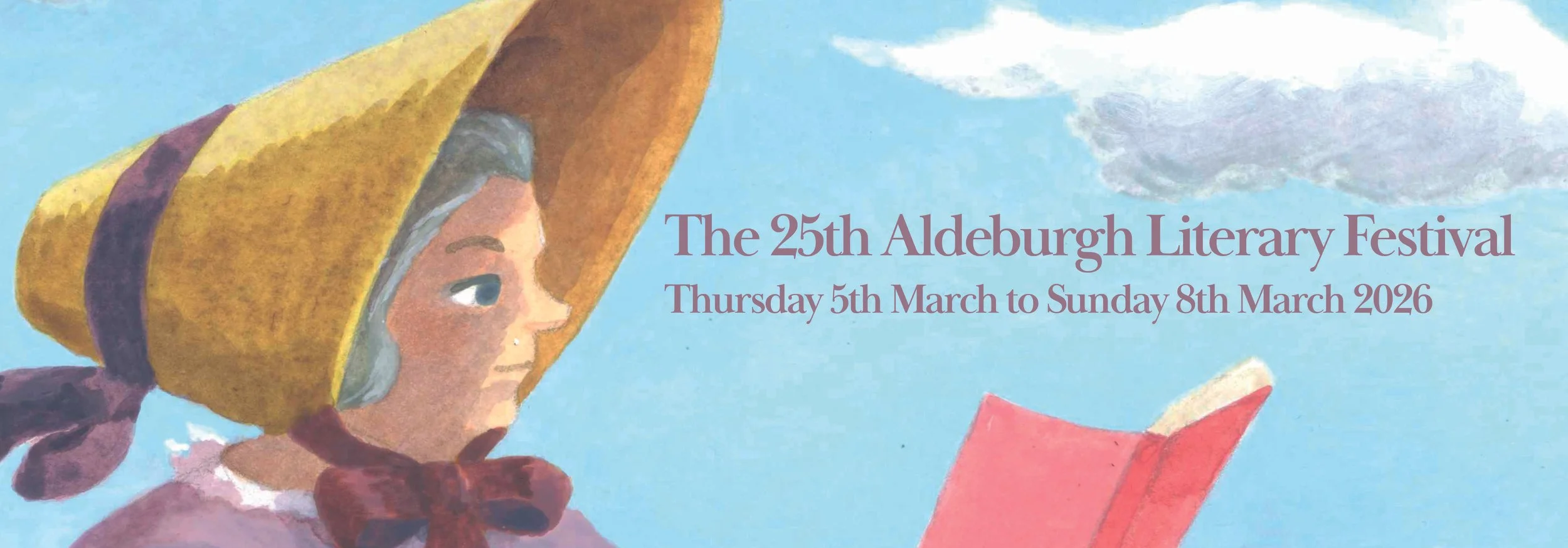
The 25th Aldeburgh Literary Festival
Thursday 5th March to Sunday 8th March 2026
All events at the Jubilee Hall, Aldeburgh
PROGRAMME
Tim Bouverie - Jung Chang - Michael Clarke - Andrew Graham-Dixon - Hester Grant - Sarah Hart - Nick Higham - Anthony Horowitz - Lucy Hughes-Hallett - Clare Jackson - India Knight - Oliver McTernan - John Mullan - Harriet Rix - Nick Robinson - William Sieghart - Jon Sopel - Peter Stanford - Jenny Uglow - Bee Wilson - Frances Wilson - Joan Winterkorn
Festival Exhibition at the Aldeburgh Gallery
There’s Always a Dog ...
by Emma Chichester Clark

Thursday 5th March
Event 1: 2.30 pm Tim Bouverie on Allies at War: the Politics of Defeating Hitler
Sold out
Tim Bouverie’s new book is a landmark history of the alliance that won the war and made the peace. Drawing on research conducted in over 100 archives, it charts the often tempestuous relations between the ‘Big Three’ - Churchill, Roosevelt and Stalin - while also including the parts played by smaller allies and important neutrals.
Tim is author of the Sunday Times bestseller Appeasing Hitler: Chamberlain, Churchill and the Road to War which was shortlisted for the Orwell Prize. He studied history at Christ Church, Oxford and was the 2020-21 Alistair Horne Fellow at St Antony’s College, Oxford.
‘An astonishing achievement. Compellingly told, immensely wide-ranging and utterly fascinating’ (James Holland).
‘A major work of history that is a pleasure to read ... A masterpiece.’ (Richard J. Evans).
Event 2: 4.15 pm Clare Jackson on The Mirror of Great Britain: A Life of James VI and I
Sold out
James VI of Scotland & I of England, who died 400 years ago, dismissed by posterity for his garrulousness, vulgarity and physical defects, was in fact one of Britain’s most consequential and interesting monarchs. Clare Jackson’s wide-ranging and insightful biography reappraises him as an intellectual and author. She finds him ‘intelligent, resilient, idiosyncratic, irascible, guileful and witty’. Many of the historical prejudices were against his Scottishness, his aversion to conflict and his homosexuality.
Clare Jackson is Honorary Professor of Early Modern History at Cambridge University
and a Fellow of Trinity Hall. She has presented a number of highly successful pro- grammes on the Stuart dynasty for the BBC and is author of the dazzling Devil-Land: England under Siege 1588-1688 which won the 2022 Wolfson History Prize. The Mirror of Great Britain appears in The Times’s Best Non-Fiction Books of 2025 and the Finan- cial Times’s Best History Books of 2025.
Event 3: 6.00 pm Jung Chang in conversation with Lucy Hughes-Hallett on Fly, Wild Swans: My Mother, Myself and China
Sold out
Jung Chang’s Wild Swans, which was published in 1991, was a book that defined a generation: an epic personal history of Jung, her mother and grandmother – ‘three daughters of China’. It opened in 1909 with Jung Chang’s grandmother’s birth – and foot-binding – when China was under the last emperor, and moved through Mao Zedong’s rule, in particular, the Cultural Revolution during which Jung’s parents were subjected to horrendous ordeals because of their courage. It finished in 1978 when Deng Xiaoping officially ended the Mao era and started the ‘reforms’. Jung, at that propitious juncture, became one of the first Chinese to leave Communist China for the West.
Fly, Wild Swans is the follow-up to Wild Swans and brings the story of Jung’s family – along with that of China – up to date. The book is in many ways Jung’s love letter to her mother but it is also – inevitably – about her grandmother and father, both of whom died tragically in the Cultural Revolution.
Jung Chang arrived in the UK in 1978 aged twenty-six, part of a Chinese scholarship programme for study abroad. She subsequently became the first person from the People’s Republic of China to be awarded a doctorate from a British university. Wild Swans has sold more than fifteen million copies worldwide. She has also written a trilo- gy of the history and personalities of modern China: Mao: The Unknown Story with Jon Halliday, Empress Dowager Cixi and Big Sister, Little Sister, Red Sister.
Lucy Hughes-Hallett is a prize-winning cultural historian, biographer and novelist. She won the Samuel Johnson Prize for Non-Fiction for The Pike, her biography of Gabriele d’Annunzio and her book The Scapegoat: The Brilliant Life of the Duke of Buckingham was published in 2024 to great acclaim. Last year she received the Biographers’ Club Award for an Exceptional Contribution to Biography.
Friday 6th March
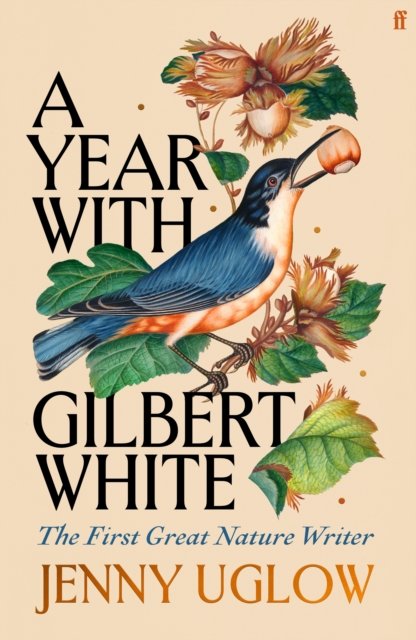
Event 4: 10.00 am Jenny Uglow on A Year with Gilbert White: the First Great Nature Writer
Sold out
In 1781, Gilbert White was a country curate, living in the Hampshire village he had known all his life. Fascinated by the fauna, flora and people around him, he kept journals for many years and, at that time, was halfway to completing his path-breaking The Natural History of Selborne. No one had written like this before, with such close observation, humour and sympathy: his spellbinding book has remained in print ever since, treasured by generations of readers.
Jenny Uglow illuminates this quirky, warm-hearted man, ‘the father of ecology’, by fol- lowing a single year in his Naturalist’s Journal. As his diary jumps from topic to topic, she accompanies Gilbert from frost to summer drought, from the migration of birds to the sex lives of snails and the coming of harvest.
Jenny Uglow writes on literature, art and social history. Her books include award-win- ning biographies of Elizabeth Gaskell and George Eliot, William Hogarth and Thomas Bewick. Jenny is a wonderful speaker and we have been fortunate enough to hear her talk about the Lunar Men, In These Times (an account of Britain during the time of the Napoleonic wars) and Edward Lear.
Event 5: 11.45 am Nick Higham on Mavericks: Empire, Oil, Revolution and the Forgotten Battle of World War One
Sold out
This is the extraordinary forgotten story of a group of British mavericks who took on an impossible mission with a daring and fearless approach.
As the First World War drew to a close and regimes began to collapse across Europe, British officials plotted a daring campaign to send an unlikely band of maverick sol- diers, diplomats and spies to the chaotic region around the Caspian Sea. Their mission: to block the advance of the Turks, to hold back the rising Bolsheviks and prevent a Turkish-inspired jihad overwhelming India, and to secure the vital supply of oil from Baku. The subsequent six-week long Battle of Baku is arguably the least remembered engagement of the First World War.
‘Thrilling and sardonic by turns’ (Spectator), Mavericks brings to life a cast of eccentric heroes who survived against all odds. This is a propulsive story of pluck and intrigue set in a forgotten corner of the Great War where the rules were made to be broken.
Nick Higham is a writer and former journalist who spent nearly thirty years as a BBC correspondent. An accomplished television and radio performer, he is also a regular interviewer at literary festivals and is a former presenter of ‘Meet the Author’ on the BBC News Channel. His history of London’s water, The Mercenary River, was published in 2022.
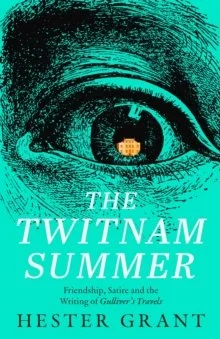
Event 6: 2.30 pm Hester Grant on The Twitnam Summer
Sold out
Exactly three hundred years ago, on 6th March 1726, Jonathan Swift left Dublin and journeyed to England with the manuscript of Gulliver’s Travels in his luggage. He took up residence at his great friend Alexander Pope’s new house on the river at Twickenham (then also known as ‘Twitnam’ or ‘Twitenham’). They were joined there by the poet and playwright John Gay.
So begins Hester Grant’s account of the trio of Scriblerus Club writers.
There followed a summer of camaraderie and creativity, as each pushed the other to new satirical heights (in Pope’s case The Dunciad and in Gay’s The Beggar’s Opera), exploring the gardens and houses of their aristocratic friends and thinking up ways to torment Robert Walpole’s corrupt Whig administration without going to jail. The summer ended with the clandestine delivery of Swift’s Travels to his publisher, and the publication in October of perhaps the most famous book of the eighteenth century.
An unlikely threesome in many ways – Swift was twenty years older, while Gay was as large and indolent as Pope was tiny and restless – the ‘three Yahoos of Twittenham’ were unmarried and took great emotional and intellectual succour from their friendship.
Hester Grant studied modern history at Christ Church Oxford, before training and practising as a barrister. In 2020 she published her first book The Good Sharps to great acclaim. It is the fascinating story of the seven ambitious, free-thinking and courageous siblings who were pioneers in the major movements that defined the eighteenth century – from political reform and philanthropy to medicine and industry.
The Twitnam Summer is to be published later this year.
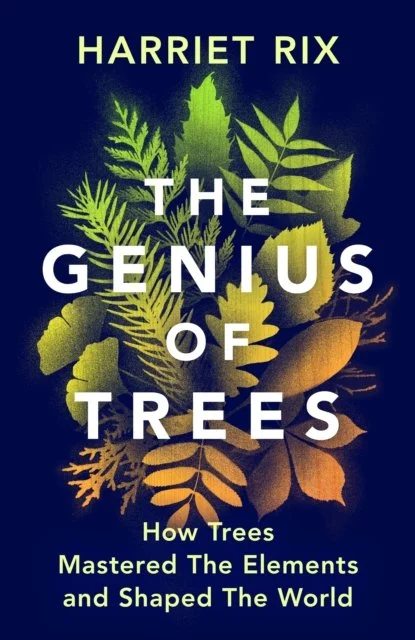
Event 7: 4.15 pm Harriet Rix on The Genius of Trees: How Trees Mastered the Elements and Shaped the World
Sold out
This is a book about the awesome power of trees. Over hundreds of millions of years, from prehistoric forests to the trees around us today, ‘using their biochemical wizardry to transform the Earth from a stony, storm-ravaged wasteland into a place where life could thrive ...[trees] broke barren rock into soil, canalised floodwaters into rivers, pumped oxygen into the atmosphere and turned the desert green. Element by element, trees have learned to control water, air, fire and the ground beneath us, as well as fungi, plants, animals and even people.’
At once transporting and expert, this profoundly original exploration of the science of trees is a startlingly new way of understanding these glories of our natural world. The Genius of Trees gives us hope for the future.
Harriet Rix is a tree science consultant and writer and an erudite and intrepid guide to the world of trees. She was formerly based at the Tree Council where she supported Defra in researching tree diseases and urban tree strategies. Before joining the tree sector, she worked in landmine clearance in the Middle East. She acted as scientific advisor on Adrian Grenier’s climate documentary, was secretary of Hedgelink and is trustee of the Iraqi environmental charity Hasar.
Rix holds a biochemistry degree from the University of Oxford and an MPhil in the history and philosophy of science from the University of Cambridge. She was a London Library Emerging Writer and her writing and photography has been published in – among others - the Financial Times, the London Review of Books and the Times Literary Supplement. The Genius of Trees is her first book.
Event 8: 6.00 pm India Knight & Bee Wilson
in conversation on The Love of Things
Sold out
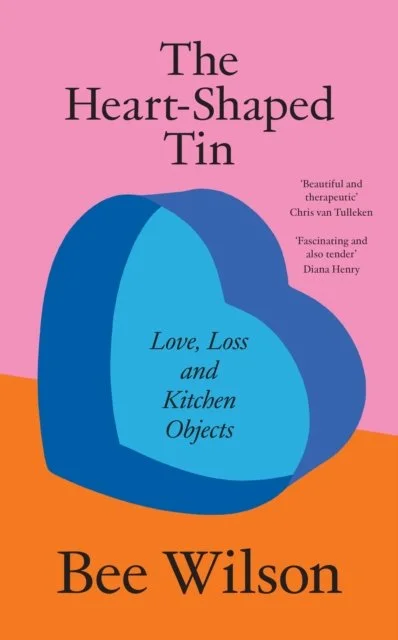
When a rusty, heart-shaped tin fell out of her kitchen cupboard, Bee Wilson found herself contemplating its significance. It had been used to bake her wedding cake
but the 23-year marriage had recently ended and Bee began to consider the way that objects – particularly kitchenalia – have the power to move us. Her fascinating book, The Heart-Shaped Tin: Love, Loss and Kitchen Objects is part memoir and part anthro- pological investigation.
Bee is an influential food writer and author of six books, including First Bite, This is Not a Diet Book and one of our new favourite cookbooks, The Secret of Cooking. She is a fellow of the Royal Society of Literature, a six-time winner of the Fortnum & Mason food writing awards and last year was made an MBE for services to food writing and education.
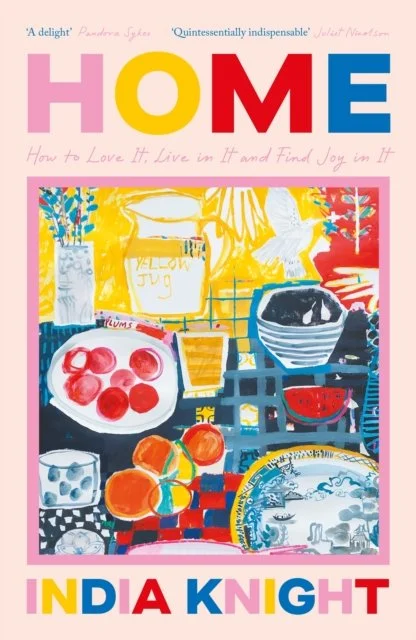
India Knight is a journalist, author and commentator. Her latest book, Home: How to Love It, Live in It and Find Joy in It, arose out of her wildly successful newsletter on Substack. She is also a novelist and recently appeared at our Literary Festival talking about Darling, and inspired retelling of Nancy Mitford’s The Pursuit of Love.
Saturday 7th March
Event 9: 10.00 am Frances Wilson and Joan Winterkorn on Electric Spark: The Enigma of Muriel Spark
Sold out
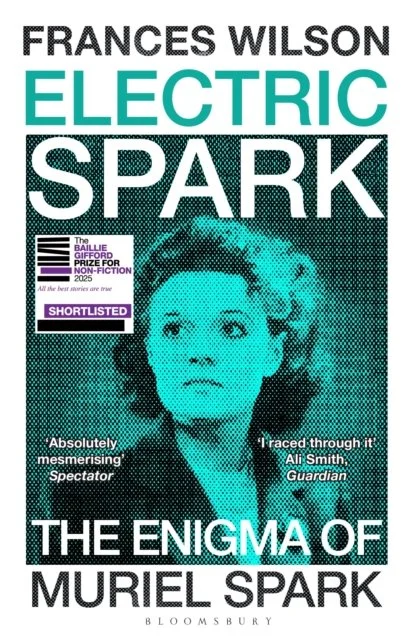
The word most commonly used to describe Muriel Spark is ‘puzzling’. Spark was a puzzle and so too are her books. She dealt in word games, tricks and ciphers; her life was composed of weird accidents, strange coincidences and spooky events. Evelyn Waugh thought she was a saint. Bernard Levin said she was a witch. She described herself as ‘Muriel the Marvel with her X-ray eyes’. Following the clues, riddles and instructions Spark planted for posterity in her biographies, fiction, autobiography and archives, Frances Wilson aims to crack her code.
Electric Spark explores not the celebrated Dame Muriel but the apprentice mage discov- ering her powers. We return to her early years when everything was piled on: divorce, madness, murder, espionage, poverty, skulduggery, blackmail, love affairs, revenge and a major religious conversion. If this sounds like a novel by Muriel Spark it is because the experiences of the 1940s and 1950s became, alchemically reduced, the material of her art.
Frances Wilson is a critic, journalist and the author of six works of non-fiction, includ- ing How to Survive the Titanic or the Sinking of J. Bruce Ismay, which won the Elizabeth Longford Prize for Historical Biography; Guilty Thing: A Life of Thomas de Quincey, a finalist for the National Book Critics Circle Award and the Los Angeles Times Book Prize and longlisted for the Baillie Gifford Prize; and Burning Man: the Ascent of D.H. Lawrence, which won the Plutarch Award. Electric Spark was shortlisted for the 2025 Baillie Gifford Prize.
Joan Winterkorn is an independent advisor on archives and manuscripts. She was
a friend of Muriel Spark and negotiated the sale of Muriel’s archive to the National Library of Scotland. She worked as an archivist in London and a rare book librarian in America before joining Bernard Quaritch Ltd in 1979. There she handled the valua- tion and sale of a large number of literary, political, scientific, theatrical and historical archives. She was awarded the Benson Medal by the Royal Society of Literature in 2006 and an MBE in 2023. Last year she delivered the prestigious Sandars Lectures at the University of Cambridge.
Event 10: 11.45 am Sarah Hart and John Mullan on Once Upon a Prime
Sold out
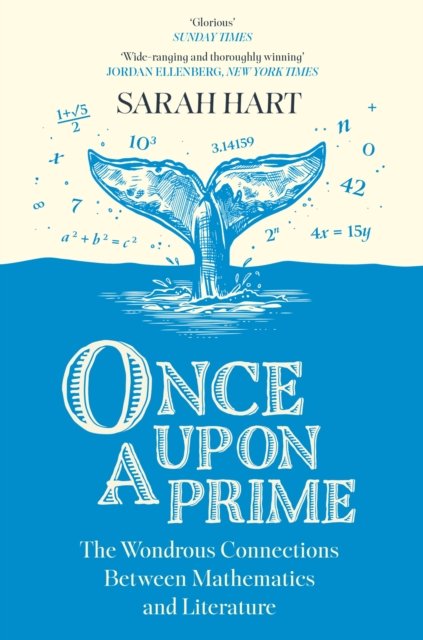
We often think of mathematics and literature as polar opposites. But what if, instead, they were fundamentally linked? Once Upon a Prime is an insightful, laugh-out-loud funny book in which Professor Sarah Hart shows us the myriad connections between maths and literature and how understanding those connections can enhance our enjoy- ment of both.
Did you know, for instance, that Moby Dick is full of sophisticated geometry? That James Joyce’s stream-of-consciousness novels are deliberately peppered with mathematical references? That George Eliot was obsessed with statistics? That Jurassic Park is under- girded by fractal patterns? That Sir Arthur Conan Doyle and Chimamanda Ngozi Adichie wrote mathematician characters?
From sonnets to fairytales to experimental French literature, Once Upon a Prime takes
us on an unforgettable journey through the books we thought we knew, revealing new layers of beauty and wonder. Professor Hart shows how maths and literature are comple- mentary parts of the same quest, to understand human life and our place in the universe.
John Mullan will be discussing Once Upon a Prime with Sarah and celebrating the meet- ing points between maths and literature.
Sarah Hart is Professor of Mathematics at Birkbeck College (University of London). Educated at Oxford and Manchester, she is the 33rd person and first woman to hold the prestigious Gresham Professorship of Geometry, the oldest mathematics chair in the UK.
John Mullan is Lord Northcliffe Professor of Modern English Literature at University College London. His books include How Novels Work (2006), What Matters in Jane Austen? (2012) and, most recently, The Artful Dickens (2020). He is also a broadcaster and journalist, writing on contemporary fiction for The Guardian and was one of the judges for the 2009 Man Booker Prize.
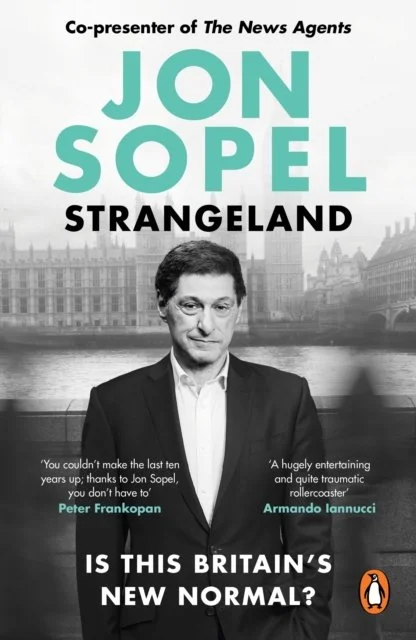
Event 11: 2.30 pm Jon Sopel and Nick Robinson on Strangeland: How Britain Stopped Making Sense and Trump’s America
Sold out
Jon Sopel was the BBC’s North America Editor for eight years, before launching The News Agents podcast with Emily Maitlis and Lewis Goodall in August 2022. During his time at the BBC, he covered the 2016 and 2020 elections and Trump’s White House at first hand, reporting for the BBC across TV, radio and online, as well as presenting the highly successful Americast podcast with Emily Maitlis and Anthony Zurcher. After eight years of political reporting in the US, Jon Sopel returned home to the UK and is now co-presenter of The News Agents podcast with Emily Maitlis.
Jon has written four books on recent events in America and Britain: If Only They Didn’t Speak English: Notes from Trump’s America, A Year at the Circus: Inside Trump’s White House, UnPresidented: Politics, Pandemics and the Race that Trumped All Others and – most recently – Strangeland.
Jon will be joined by Nick Robinson to discuss these books and the state of the world.
Nick Robinson has been Political Editor of both the BBC and ITV news and is now best known as a presenter of Radio 4’s Today programme. He has written two books on what was then contemporary politics: Live from Downing Street (2012) and Election Notebook (2015).
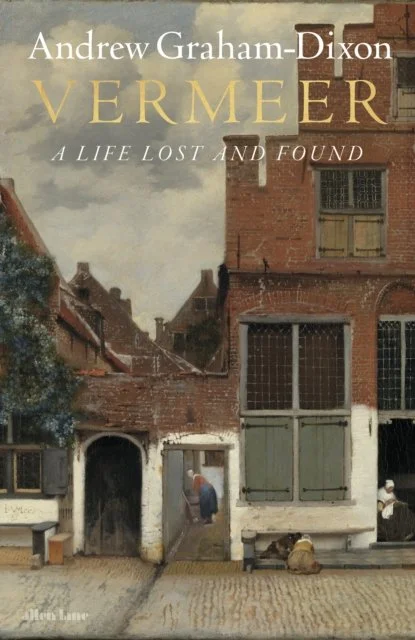
Event 12: 4.15 pm Andrew Graham-Dixon on Vermeer: a Life Lost and Found
Sold out
The paintings of Johannes Vermeer of Delft are some of the most beautiful, even sublime, in the history of art. Yet like the life of Vermeer himself, they are mysterious and have for centuries defied explanation. Following new leads and drawing on a mass of historical evidence, some of it freshly uncovered in the archives of Delft and Rotterdam, Andrew
Graham-Dixon paints a dramatically new picture of Vermeer, revealing many of the painter’s hitherto unknown friendships as well as his previously undetected allegiance to a radical movement driven underground by persecution.
‘Vermeer is a powerfully persuasive investigation into the intellectual and devotional world of Vermeer and his circle. Painting by painting, the riddle of the Sphinx is master- fully unravelled ...’ Laura Freeman, The Times.
Andrew Graham-Dixon is an art historian, critic, author and broadcaster. He served as chief art critic at both The Independent and The Telegraph and presents art documentaries for the BBC, as well as five series of Italy Unpacked, in which he explored the culture and cuisine of Italy with chef Giorgio Locatelli. He has written a number of books about art and artists, including a biography of Caravaggio, which was shortlisted for the Samuel Johnson Prize for non-fiction (now the Baillie Gifford).
Event 13: 6.00 pm Oliver McTernan in conversation with William Sieghart: Is Peace Elusive?
Sold out
Oliver McTernan talks to William Sieghart about the work of the charity Forward Thinking in the Israeli/Palestinian conflict over the last twenty years and gives an analysis of the plan for the path forward for the two peoples.
Oliver McTernan has an established background in conflict resolution and mediation and was responsible for initiating the first post-Kosovo conflict talks between NATO and the Belgrade government. His book Violence in God’s Name explores the role of religion in an age of conflict. He was a Fellow of Harvard University’s Centre for International Affairs and broadcasts regularly on radio and television.
William Sieghart has a distinguished career in publishing and the arts. He is the founder of National Poetry Day, the Forward Poetry Prize, The Big Arts Week and Bedtime Reading Week. He founded StreetSmart: Action for the Homeless and is also a governor of the British Institute of Human Rights. He is chair of the Arts Foundation and from 2000-2006 was a member of Arts Council England and chair of its Lottery Panel.
Sunday 8th March
Event 14: 10.00 am Michael Clarke: How Should Britain Defend Itself in the Twenty-First Century?
Sold out
Since the beginning of the new millennium, Britain has been involved in many different conflicts throughout the world and now faces threats to its security from - amongst others - Russia, China and Islamic State. If we assume that it is a duty of the state to protect its citizens and arguably to prevent them from having to go to war, how should we define Britain’s role in the world and how should it arm itself to carry out that role?
Who better to answer this question than Michael Clarke? Michael is a Visiting Profes- sor at King’s College London and at the University of Exeter. He was founding director of the Centre for Defence Studies and the International Policy Institute, both at King’s College London, before becoming Deputy Vice-Principal at King’s. In 2007 he left King’s to take up the post of Director-General of the Royal United Services Institute. From 1997 to 2024 he was a specialist adviser to several parliamentary committees, latterly with the Joint Committee on the National Security Strategy and has previously been a member of the Chief of Defence Staff’s advisory board and the Prime Minister’s National Security Forum. He is a Fellow of King’s College London, the University of Aberystwyth and the Royal College of Defence Studies and is currently Defence and Security Analyst for Sky News.
Michael’s latest book, Great British Commanders: Leadership, Strategy and Luck, was published in October 2024.
Event 15: 11.45 am Anthony Horowitz: A Life In Murder
Sold out
Anthony Horowitz is responsible for creating and writing some of the UK’s most loved and successful TV series, including Midsomer Murders and Foyle’s War. He is also author of the teen spy Alex Rider series, which has sold more than twenty million copies worldwide.
He has been widely praised for his murder mysteries which began with two highly acclaimed Sherlock Holmes novels and three James Bond continuation novels and continued with the bestselling Hawthorne books in which he appears as the former detective’s hapless sidekick. The sixth book in the series, A Deadly Episode, will be released next month.
In January 2022 he was awarded a CBE for services to literature.
His fiendishly brilliant novel Magpie Murders was made into a BBC drama starring Lesley Manville as editor Susan Ryeland. The sequel, Moonflower Murders, also starring Lesley Manville, was a BBC drama in 2024 and the third book in the series, Marble Hall Murders will be televised on the BBC later this year.
On November 11th last year Her Majesty The Queen chose Moonflower Murders as The Queen’s Reading Room book club pick for November.
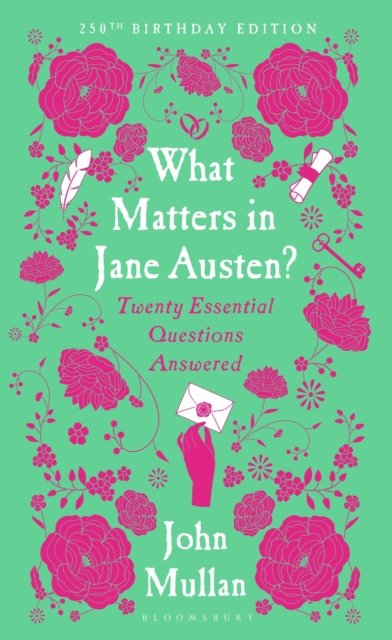
Event 16: 2.30 pm John Mullan on Jane Austen’s Genius
Sold out
Jane Austen was born on December 16th 1775. To celebrate her 250th birthday author, academic and Jane Austen expert, Professor John Mullan, will demonstrate the brilliance of her novels. The talk will be richly illustrated with examples of her ingenuity. We will see how Austen takes us into the minds of her characters, allowing us to understand what they hardly know themselves. John has edited Jane Austen’s Sense and Sensibility and Emma for Oxford World’s Classics. He has taught Austen to university students in the UK and the USA for over three decades. His book What Matters in Jane Austen? Twenty Essential Questions Answered has just been republished in an elegant new edition to celebrate this milestone anniversary.
John Mullan is the Lord Northcliffe Professor of Modern English Literature at University College, London. He has published widely on eighteenth- and nineteenth-century literature, including The Artful Dickens and How Novels Work.
Event 17: 4.15 pm Peter Stanford on Gaudi, God’s Architect
Sold out
In 1926, Antoni Gaudi was knocked down by a tram, mistaken for a tramp and spent his last hours in a paupers’ hospital. His architecture, however, is among the world’s most instantly recognisable and his still-unfinished basilica La Sagrada Familia welcomes five million visitors annually. Yet today, in the centenary year of his death, much about this unworldly genius remains a mystery, not least the source of inspi- ration for his extraordinary buildings. His own explanation - that the fount of his imagination was God - sits uncomfortably alongside his modern-day fame in a secular world that nonetheless celebrates him.
In reconnecting Gaudi’s architecture with the highs and lows of his faith, Peter Stanford walks in his footsteps through Barcelona, retracing his life through the build- ings, parks and landscapes he admired and those that he created.
Peter Stanford is a writer, editor, journalist and presenter, known for his biographies and writings on religion and ethics. We are delighted to welcome Peter back - he has talked previously at our festival on If These Stones Could Talk: the History of Christianity in Britain and Ireland in Twenty Buildings and Angels, a History. He has written for The Sunday Times, The Guardian, The Observer and The Independent on Sunday and is a feature writer for The Daily Telegraph.
The Aldeburgh Literary Festival Exhibition
at the Aldeburgh Gallery, 143 High Street
From Thursday 5th to Wednesday 11th March 2026
Emma Chichester Clark
There’s Always a Dog ...
Emma Chichester Clark is one of Britain’s best-loved children’s authors and illustrators. She started drawing ‘just about as soon as I could hold a pencil. But I could never find enough paper and my mother wouldn’t let me use her Basildon Bond. So secretly I used to tear the blank pages out of her grown-up books and draw on them and make my own little books.’
Emma has produced more than sixty publications of her own and has also illustrated books by Roald Dahl, Kevin Crossley-Holland, Peter Dickinson and Michael Morpurgo. Most recently, she worked with Quentin Blake on the delightful Three Little Monkeys series.
Emma studied at the Chelsea School of Art and - under Quentin Blake – at the Royal College of Art. She has worked as a freelance illustrator for various magazines, publishers and advertising agencies as well as teaching art for several years.
She has also illustrated numerous book jackets. In 1988 she won the Mother Goose Award for her first book, Listen to This!, an anthology compiled by Laura Cecil, and was the first winner of the newly-created Grinzane Junior Award for I Love You, Blue Kangaroo. Her books about her beloved dog Plum appeal
to all ages and many scenes are set in Aldeburgh where Plum lived. We are now looking forward to meeting Lupin, pictured to the right.
The Aldeburgh Literary Festival would like to thank
Emma Chichester Clark for the Festival Exhibition and the cover artwork Harriet Bailey, Jules Bell, Carol Briggs, Katherine Hearn, Anna Hills, Sarah Morland, Tilly Farrow and Dee Ewing at The Aldeburgh Bookshop
Torben Merriott and his team at Blackwing
Miranda Barclay, Sarah Cole, Tamarisk Mitchell Cotts, Karen Lear and Rob Wheeler for front of house duties
Amelia Chadd, Catriona Chase, Rob Chase and Tracy Rogers at the Festival Box Office
Mabel McCabe for Festival photographs
Margaret Currie at the Aldeburgh Gallery
Emily Mummery and the team at the Jubilee Hall
Ffiona Lewis for permission to use the fabulous banners
Celandine Mitchell Cotts for design work
Our Quarter Century
We have reached a quarter of a century since the birth of the Aldeburgh Literary Festival. To celebrate, we thought you might enjoy looking back at the names of almost 350 outstanding writers, playwrights, scientists, speakers and artists who - together with you, our audience - have made the event what it is today. The list includes two Nobel Prize winners, three former Chancellors of the Exchequer, an Astronomer Royal, a former Archbishop of Canterbury, three Generals (in- cluding a Chief of the General Staff), two former Home Secretaries, an ex-Head of MI6, numerous literary, historical and biography prize winners - and Alan Bennett.
Tariq Ali
Nicholas Allan
Charles Allen
Melanie Anstey Chater
Anne Applebaum
Claire Armitstead
Karen Armstrong
Frances Ashcroft
Micky Astor
Helena Attlee
Julian Baggini
Paul Bailey
Catherine Bailey
Beryl Bainbridge
Julian Barnes
Andrew Barrow
Sally Beauman
Gillian Beer
Anthea Bell
Tony Benn
Alan Bennett
Kate Bingham
Xandra Bingley
Paul Binski
Tim Birkhead
Terence Blacker
William Blacker
Juliet Blaxland
Ronald Blythe
Tim Bouverie
Jeremy Bowen
Rosie Boycott
William Boyd
Mike Brearley
Emma Bridgewater
Eleanor Bron
Michael Brooke
Craig Brown
Kerry Brown
James Buchan
Ursula Buchan
Elizabeth Burke
Humphrey Burton
Robert Butler
A.S. Byatt
James Cahill
Liz Calder
Carmen Callil
Jon Canter
Humphrey Carpenter
Justin Cartwright
John Casey
Helen Castor
Mary Chamberlain Alina Chan
Edward Chancellor
Kate Charlton-Jones
David Chater
Charles Clover
Tim Coates
Jonathan Coe
Ian Collins
Artemis Cooper
Nick Cottam
Con Coughlin
John Crace
Nick Crane
Adam Crick
Helen Cross
Charles Cumming
Laura Cumming
Richard Dannatt
Alistair Darling
Richard Davenport-Hines
Nick Davies
Richard Dawkins
Jill Dawson
Mary Dejevsky
Jonathan Dimbleby
Roddy Doyle
Margaret Drabble
Kate Drayton
Eamon Duffy
Sarah Dunant
Emma Duncan
Laurence Edwards
Bill Emmott
Edzard Ernst
Hermione Eyre
Harry Eyres
Graham Farmelo
Sebastian Faulks
William Fiennes
Susannah Fiennes
Orlando Figes
Daniel Finkelstein
Mark Ford
Aminatta Forna
Richard Fortey
Alastair Fothergill
Garth Fowden
Julia Fox
Kate Fox
Clare Francis
Peter Frankopan
Antonia Fraser
Christopher Frayling
Michael Frayn
Lawrence Freedman
Nicci French
Esther Freud
Patrick Gale
Jane Gardam
Frank Gardner
Anna Garry
Timothy Garton Ash
Sue Gee
Andrew Gimson
Anthony Gottlieb
Dave Goulson
Lavinia Greenlaw
Jeremy Greenstock
John Guy
Sheila Hale
Thomas Halliday
Maggi Hambling
Christopher de Hamel
James Hamilton
Robin Hanbury-Tenison
Georgina Harding
Tim Harford
Alexandra Harris
Robert Harris
Melissa Harrison
Selina Hastings
Max Hastings
Natalie Haynes
Denis & Edna Healey
Paul Heiney
Peter Hennessy
Katie Hickman
Rosemary Hill Ian Hislop
Victoria Hislop
Henry Hitchings
Simon Hoggart
Tom Holland
Richard Holmes
Michael Holroyd
Rachel Hore
Gill Hornby
Anthony Horowitz
Elizabeth Jane Howard
Kathryn Hughes
Lucy Hughes-Hallett
John Humphrys
Tristram Hunt
Anya Hurlbert
Julian Jackson
P.D. James
Louis Jebb
Simon Jenkins
Alan Johnson
Daniel Johnson
Julia Jones
Anatole Kaletsky
Martha Kearney
Anna Keay
Lucy Kellaway
Pascal Khoo Thwe
Sam Kiley
India Knight
David Kogan
David Kynaston
John Lahr
Christina Lamb
Lucinda Lambton
Sarah Langford
Mark Lawson
Nigel Lawson
Hermione Lee
Sam Leith
Doris Lessing
Lucy Lethbridge
John Lewis-Stempel
Leanda de Lisle
Penelope Lively
John Lloyd
David Lodge
Matthew Longo
Edward Lucas
Katia Lysy
Richard Mabey
Diarmaid Macculloch
Helen Macdonald
Ben Macintyre
Margaret MacMillan
Philip Mansel
Adam Mars-Jones
Patrick Marnham
Justin Marozzi
Henry Marsh
Hugh Massingberd
Christopher Matthew
Ysenda Maxtone Graham
Simon Mayall
Annalena McAfee
EamonnMcCabe
Alexander McCall Smith
John McCarthy
Ian McEwan
Patrick McGuinness
Giles Milton
Mark Miodownik
Julian Mitchell
Deborah Moggach
Violet Moller
Charles Moore
Caroline Moorehead
Marc Morris
Oliver Morton
Nicholas Mosley
Kate Mosse
Ferdinand Mount
John Mullan
Fiona Murphy
Julie Myerson
Jeremy Mynott
Sam Newton
David Nicholls
William Nicholson
Virginia Nicholson
Adam Nicolson
Juliet Nicolson
Catherine Nixey
Irene Noel-Baker
Jesse Norman
Frances Osborne
David Owen
Susan Owens
Ann Pettifor
Adam Phillips
Keiron Pim
Harold Pinter
Peter Pomerantsev
Alan Powers
John Preston
Alex Preston
Sue Prideaux
David Profumo
Libby Purves
Anthony Quinn
Carol Ray
Martin Rees
David Reynolds
Jacqueline Riding
Matt Ridley
Jane Ridley
Nick Robinson
Eugene Rogan
Barnaby Rogerson
Lyndal Roper
Michael Rose
Meg Rosoff
Amber Rudd
Adam Rutherford
Julia Samuel
Dominic Sandbrook
Charles Saumarez Smith
Brough Scott
Roger Scruton
Will Self
Robert Service
Anil Seth
Miranda Seymour
Peter Shaffer
Nicholas Shakespeare
Michael Sheridan
Avi Shlaim
Lionel Shriver
David Shukman
Nicola Shulman
William Sieghart
Mary Ann Sieghart
Posy Simmonds
Simon Singh
Emma Smith
Emma Soames
Oliver Soden
Andrew Solomon
Frances Spalding
Charles Spencer
Francis Spufford
Hilary Spurling
Peter Stanford
Nina Stibbe
James Stourton
Rory Stuart
Sue Stuart-Smith
Matthew Sturgis
Jonathan Sumption
Daniel Susskind
Colin Sydenham
D.J. Taylor
Gillian Tett
Hugh Thomas
Colin Thubron
Adrian Tinniswood
Sandi Toksvig
Claire Tomalin
Boyd Tonkin
Isabella Tree
Rose Tremain
Joanna Trollope
Bill Turnbull
Jenny Uglow
Salley Vickers
Pen Vogler
Edmund de Waal
Stephen Walker
John Walsh
Frances Welch
Martin Vander Weyer
Francis Wheen
Rowan Williams
A. N. Wilson
Frances Wilson
Andrew Wilson
Simon Winder
Joan Winterkorn
James Woodall
Alex Younger
Adam Zamoyski
The 25th Aldeburgh Literary Festival 42 High Street, Aldeburgh IP15 5AB 01728 452389
johnandmary@aldeburghbookshop.co.uk
www.aldeburghliteraryfestival.co.uk
01728 452389
but please don't ring with your ticket orders
Tim Bouverie